How to Safely Clean Pool Cage & Lanai Screens
Here's the short, honest answer up front: never high-pressure your pool cage or lanai screens. The single most important thing to know about how to clean pool cage screens is that the mesh is fragile — a pressure-washing tip will tear it or pop it loose from the frame. Screens need a gentle, low-pressure soft wash instead, where a cleaning solution does the work and the water just rinses it away. Let me walk you through why, what actually gets cleaned, and how often a Florida lanai needs it.
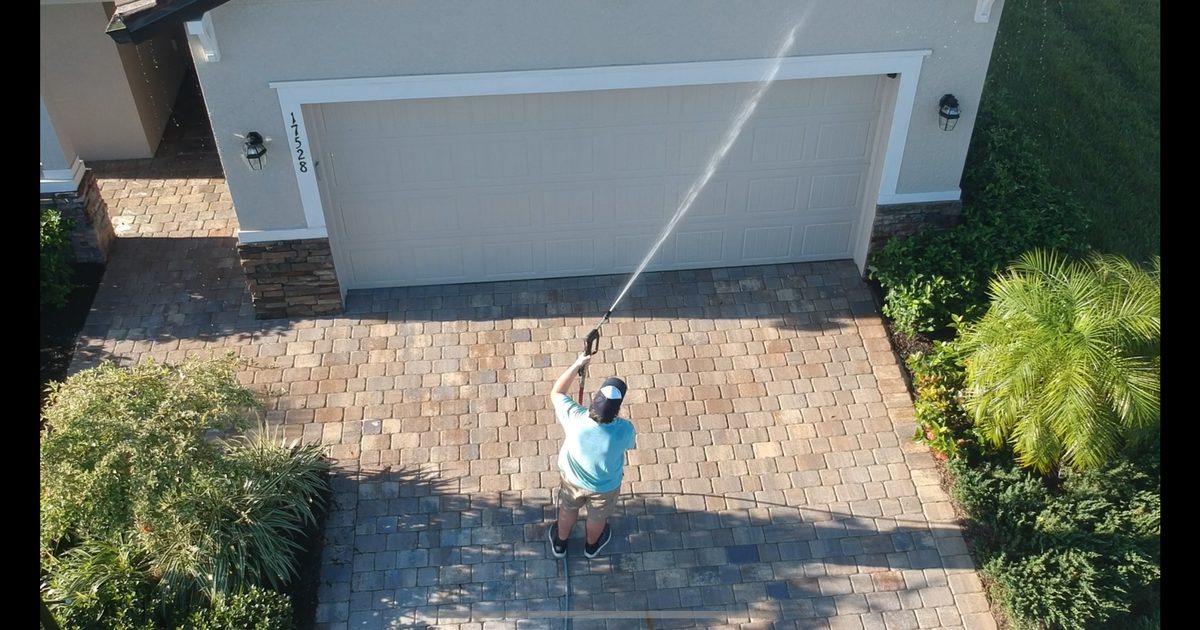
Why you can't pressure wash pool cage screens
A pool cage screen is just fine mesh stretched tight inside an aluminum frame and held in place with a thin spline. It's built to keep bugs out and let breeze through — not to take a 3,000+ PSI blast. Point a pressure washer at it and one of two things happens: the stream punches a hole straight through, or it stretches the mesh and forces the spline out so a whole panel sags loose. Either way, what started as a cleaning becomes a re-screening bill, and re-screening a full enclosure isn't cheap.
The right method here is the same low-pressure approach we use on delicate home exteriors during a house soft wash — gentle on the surface, tough on the growth.
The right way: a low-pressure soft wash
Soft washing flips the formula. Instead of relying on force, it uses low pressure plus a professional cleaning solution that kills mold, mildew, and algae at the root rather than just knocking it loose. The solution clings, dwells, and breaks the growth down; a soft, low-pressure rinse then carries it all away. There's no blasting force anywhere near the mesh, so the screens, frame, and spline all stay put.
This is exactly the method behind our pool cage & lanai screen cleaning. As with any soft wash, the landscaping around your enclosure is protected too — plants get pre-wet before the solution goes on and rinsed thoroughly afterward, and the solution is diluted to safe levels so your pool deck plantings aren't harmed.
What actually gets cleaned
A proper lanai cleaning is more than the mesh. I treat the whole enclosure so it looks uniform and stays clean longer:
- The screens themselves — every panel, soft-washed to lift the green and black film without touching the fibers with pressure.
- The aluminum frame — the top rails, uprights, and kick plates where dirt streaks and mildew collect and run down onto the screen.
- The pavers or concrete inside the cage — the pool deck surface gets surface-cleaned so the floor matches the freshly cleaned screens. (On colored or stamped pavers it's all about technique — a low-pressure surface cleaner, the right dilution, and a thorough rinse, so the joint sand stays put — and Logan will point out any that needs topping up afterward.)
The result is an enclosure that feels brighter and more open — you'd be surprised how much light a film of algae quietly steals.
Why Florida lanais get dirty so fast
If you live in Bradenton or Lakewood Ranch, you know the climate is hard on outdoor surfaces. Our heat and humidity are a perfect greenhouse for mold, mildew, and algae, and a screen enclosure catches all of it. A few things pile up faster on a lanai than anywhere else on the property:
- Algae and mold film — that gray-green haze that builds on the shaded, north-facing screens first.
- Pollen — Florida's spring pollen settles into the mesh and turns it dusty yellow.
- Love-bug season — those twice-a-year swarms leave splatter and residue baked onto screens and frames.
- Pool chemistry and rain spotting — splash-out and mineral spotting around the deck edges.
None of that comes off with a garden hose, and none of it should be attacked with pressure — it needs the dwell-and-rinse chemistry of a soft wash.
One thing we don't do — and won't pretend to
While we're talking honestly about pressure: Polar Bear cleans screen enclosures, house exteriors, driveways, gutters, and windows — but we do not clean roofs. If a company ever offers to high-pressure your roof or your screens, that's your sign to keep looking. The right method matched to the right surface is the entire job, and forcing pressure where it doesn't belong is how people end up paying for repairs.
How often should you clean a pool cage?
For most homes in our area, once or twice a year is the sweet spot. An enclosure with good sun exposure can often go a full year. But if your cage sits in shade, backs up to heavy landscaping, or fights a lot of pollen and love-bug buildup, twice a year keeps the growth from ever getting a foothold — and regular maintenance is far cheaper than letting algae embed for years. Many customers fold a lanai cleaning in alongside an annual driveway or house wash, since I'm already on site with the rig.
The bottom line
Your pool cage is one of the most-used parts of a Florida home and one of the most delicate to clean. Skip the high pressure — it tears screens and loosens frames. A gentle, low-pressure soft wash safely strips the algae, pollen, and love-bug grime from the screens, frame, and pavers and leaves the whole enclosure bright again. If you're not sure where your lanai stands, send me a photo and I'll tell you straight what it needs with an honest, free estimate — most quotes the same day, and most jobs done within 48 hours of booking.