Does Pressure Washing Damage Concrete or Your Driveway?
Short answer: no — pressure washing does not damage concrete when it's done right. Concrete is one of the toughest surfaces around your home, and a clean driveway can take serious water pressure without a problem. The horror stories you've seen — etched lines, fuzzy patches, zebra stripes — almost always come from technique, not from the concrete itself. Here's exactly how concrete can get damaged, why it usually doesn't, and how a pro keeps your Bradenton driveway brilliant-white and intact.
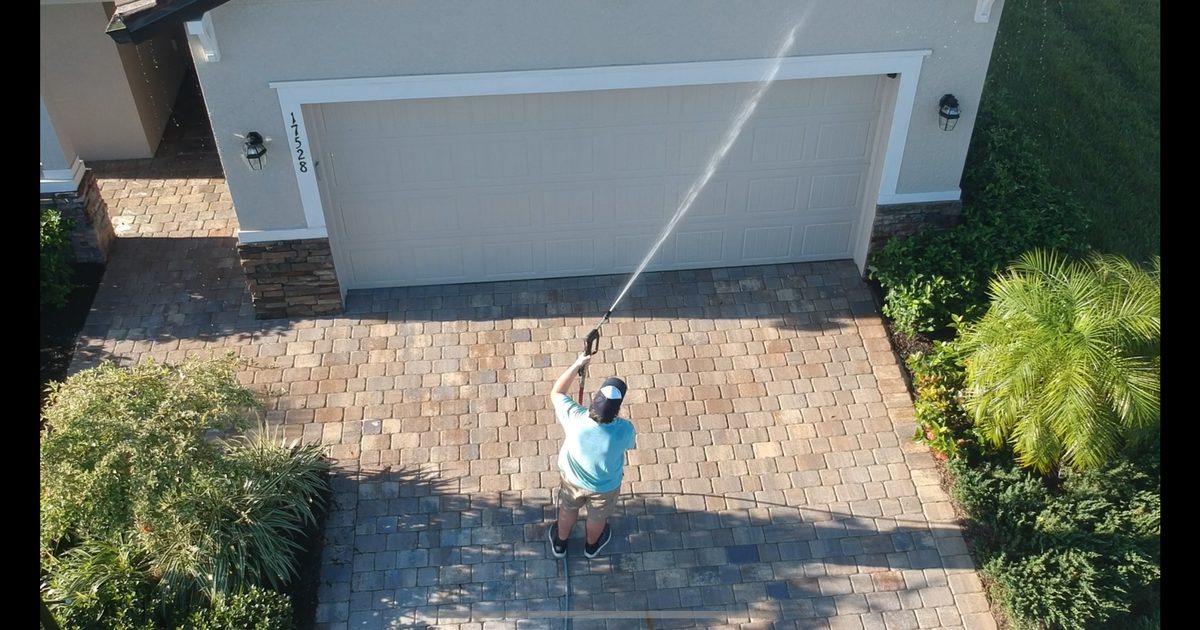
Does pressure washing damage concrete? Etching myth vs. reality
The fear of "etching" is the number-one reason homeowners hesitate to have their driveway cleaned. Etching is real — but it isn't caused by pressure washing in general. It's caused by too much pressure in too small a spot for too long.
The usual culprit is a narrow turbo nozzle or a zero-degree tip held an inch off the surface. That concentrates thousands of PSI into a pencil-thin point. Drag it slowly, pause on one area, or wave it around freehand, and you'll carve faint lines or a pitted, fuzzy texture into the top layer of the slab. Once that surface paste is gone, it doesn't come back — the marks are permanent.
The reality: that's an avoidable mistake, not an inherent risk. Cured concrete is designed to handle weather, vehicle traffic, and decades of abuse. Cleaned with the right equipment and a steady, even pass, it shrugs off the water entirely. The pressure isn't the enemy — concentrating it in one spot is.
Why pros use a flat surface cleaner, not just a wand
Here's the single biggest thing that separates a damaged driveway from a beautiful one: the flat surface cleaner. Instead of a single jet from a hand wand, a surface cleaner is a round disc that spins two or more nozzles under a shroud, sweeping the pressure evenly across the whole width as it glides.
That even sweep does two things. It cleans uniformly — no "zebra striping" where wand passes overlap and leave light and dark bands — and it spreads the force so no single point ever gets gouged. The result is the smooth, consistent, brilliant-white finish that's the whole goal of our driveway & concrete cleaning package. A hand wand still has its place for edges, corners, and detail work, but the open expanse of a driveway should always be done with a surface cleaner. It's the core method behind most professional pressure washing in Bradenton.
Pavers and stamped concrete need a lighter touch
Not all concrete is created equal. Standard poured slabs are forgiving, but two surfaces need real care:
- Pavers. The sand packed between paver joints is what locks them in place. Too much pressure blasts that joint sand right out, which can let pavers shift over time and lets weeds creep back faster. Pavers get cleaned at a controlled pressure, and if the joint sand needs topping up afterward, Logan will flag it so it can be re-sanded.
- Stamped & sealed concrete. Decorative stamped concrete and sealed surfaces have a coating that gives them their color and sheen. Hammer it with high pressure and you'll strip the sealer, leaving a dull, blotchy patch. These get a gentler approach to protect the finish.
This is exactly why "do you pressure wash everything?" gets a nuanced answer — the pressure gets matched to the surface, every time.
Oil and rust: why pretreatment matters
Plain water and pressure won't remove everything. Oil spots, rust stains, and the deep-set algae that Florida's humidity grows so quickly are chemical problems, not pressure problems. Trying to blast an oil stain out with more PSI is precisely how people end up etching their concrete — they crank the pressure to fight a stain that pressure was never going to beat.
The right move is pretreatment. A cleaning solution is applied first to break down oil, kill the algae and mildew at the root, and lift rust, so the surface cleaner can rinse it away at a safe pressure. That's why pretreatment is included in our concrete work — it gets a deeper, longer-lasting clean without resorting to damaging force. In our humid Bradenton and Lakewood Ranch climate, that root-level kill is also why a proper clean stays white far longer than a quick blast.
How Polar Bear keeps your concrete safe
I'm Logan, and I personally do every job — so the technique is on me, not a rushed crew. Driveways, sidewalks, and curbs get a flat surface cleaner at the right pressure, pretreatment for stains and algae, and a careful eye on pavers and decorative surfaces so nothing gets stripped or gouged. I run a professional, industry-grade trailer rig rather than a box-store wand, which is a big part of why the finish comes out even and damage-free. Florida driveways should be cleaned at least once a year — twice for shaded or HOA-watched properties — to keep algae from ever getting a foothold.
The bottom line
Done right, pressure washing won't hurt your concrete — it'll make a gray, streaked driveway look new again. The damage people fear comes from the wrong tip, too much pressure in one spot, and skipping pretreatment, all of which a careful pro simply doesn't do. If you've been putting off cleaning your driveway because you were worried about etching, that worry is exactly what good technique solves. Reach out for a straight answer and a free estimate — most quotes same day, most jobs done within 48 hours.