Does Pressure Washing Kill Mold & Algae, or Just Remove It?
Here's the honest, straight answer most homeowners are really asking: does pressure washing kill mold, or does it just come back? Plain high-pressure water mostly removes the green and black growth you can see — it doesn't kill it. To make mold and algae actually stay gone, you need a cleaning solution that kills it at the root. In humid Florida, that difference is the whole ballgame.
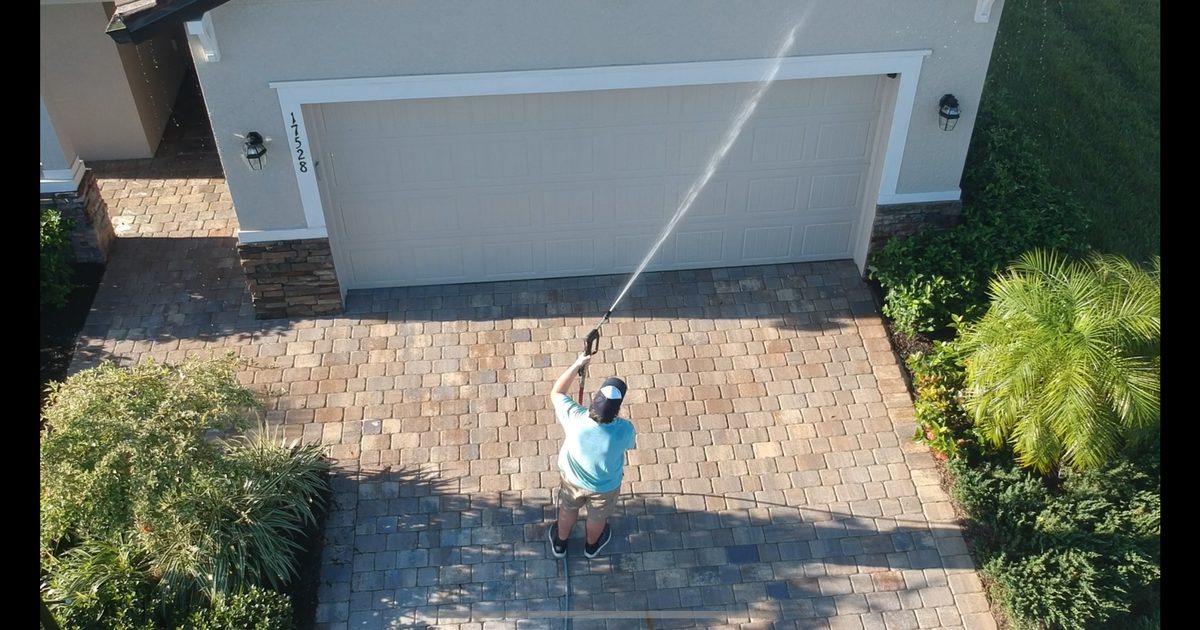
Remove vs. kill: what plain pressure washing actually does
Mold, mildew and algae aren't just sitting on top of your concrete or siding like dust. They're living organisms with roots and spores that work down into the pores and texture of the surface. When you hit them with nothing but high-pressure water, you knock the visible top layer loose — the surface looks clean and bright the day the job is done.
But the roots and spores are still there. Water alone scatters them; it doesn't kill them. With Florida's heat and moisture feeding what's left behind, the growth regenerates from those roots and the green or black film creeps right back. That's why so many homeowners tell me their driveway "was just done a couple months ago" and already looks dirty again. It wasn't really cleaned at the biological level — it was rinsed.
Does a soft wash kill mold, or just remove it too?
This is where the method matters. A soft wash uses low pressure plus a professional cleaning solution that actually kills mold, mildew and algae at the root — it's not relying on brute force to scatter the growth, it's killing the organism so it can't grow back from what's left. The solution does the real work; the gentle rinse just carries away the dead growth.
Because it kills rather than blasts, a soft wash is also the only safe choice for delicate surfaces — siding, painted trim, screens and lanais — where high pressure would force water behind the siding or tear pool-cage mesh. (One important honesty note: we do not clean roofs, and you should never let anyone aim high pressure at shingles — that strips granules and voids warranties.) For exterior walls, our house washing soft wash is built around this kill-at-the-root approach, and as a bonus it leaves the house smelling fresher, thanks to the scented soap in every house wash.
How long does it stay gone in Florida?
Even a proper soft wash isn't permanent — nothing is, in this climate. How long your surfaces stay clean comes down mostly to sun and shade:
- Sunny, open areas — a south-facing driveway or a wall with good airflow can stay clean for a year or more after a soft wash, because the surface dries out and gives algae nothing to feed on.
- Shaded, damp areas — north-facing walls, spots under trees, or anything that stays wet can start to green up again in just a few months. Constant moisture is exactly what mold and algae need.
That shade-vs-sun gap is the single biggest reason two houses on the same street need cleaning on completely different schedules. It's also why I never quote a one-size-fits-all "comes back in X months" — I'd rather look at your actual property.
Why maintenance cleaning beats one-time blasting
If plain pressure washing only buys you a few months, paying for it over and over is the expensive way to a clean home. A kill-at-the-root soft wash on a sensible schedule keeps surfaces genuinely clean and stops algae before it stains and etches into concrete. For most Bradenton and Lakewood Ranch homes, that means a once-a-year soft wash, with shaded lots or HOA-watched properties going twice a year. If you want the full breakdown for concrete specifically, I cover it in how often you should pressure wash your driveway in Florida.
Staying ahead of it also keeps you out of trouble with the neighborhood. Algae-streaked driveways and mold-stained exteriors are one of the most common HOA violation triggers around here, and our HOA compliance cleaning exists to fix exactly that, fast — guaranteed to pass inspection or I come back free. Annual maintenance plans are available so it's handled before a letter ever shows up in your mailbox.
The bottom line
So — does pressure washing kill mold and algae? On its own, no: high-pressure water removes what you can see but leaves the roots behind, and in Florida humidity it returns fast. A soft wash with the right cleaning solution kills it at the root so it stays gone far longer. Match the method to the surface, clean on a smart schedule, and you stop paying to "remove" the same growth over and over.