12 Things You Should Never Pressure Wash
A pressure washer is a fantastic tool — on the right surface. The trouble starts when people aim 3,000 PSI at things that were never built to take it. After years of cleaning homes around Bradenton and Lakewood Ranch, the most expensive jobs I get called to fix are almost always damage from a high-pressure wand pointed at the wrong spot. So here, straight from a pro, are the 12 things you should never pressure wash — and the safer way to clean each one.
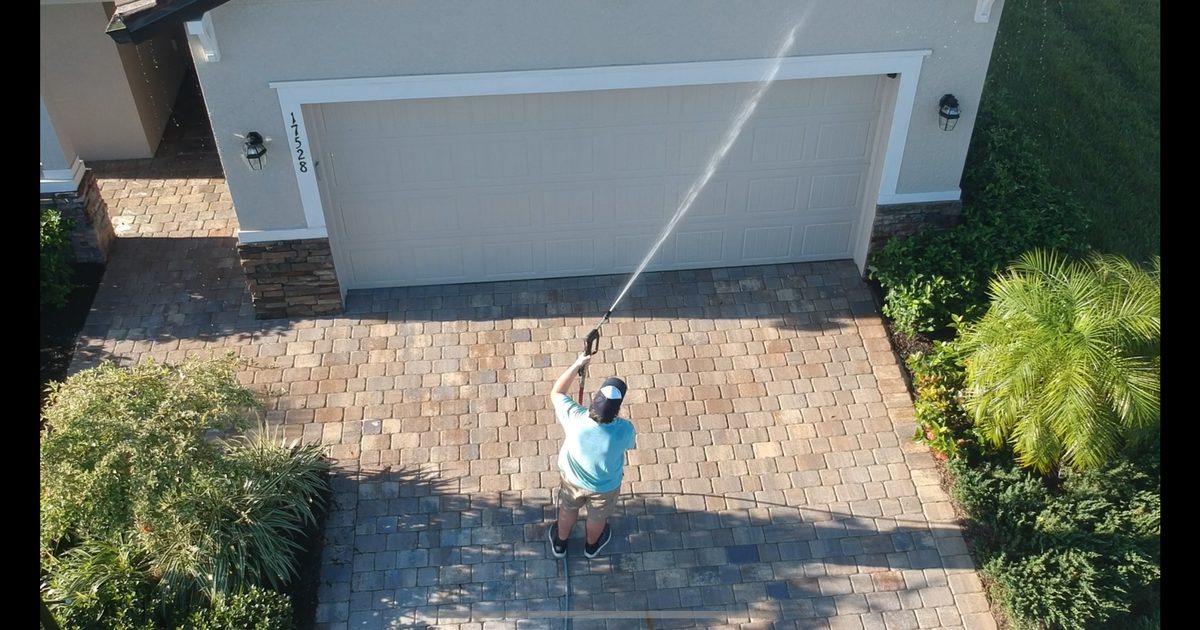
The 12 things you should never pressure wash
A good rule of thumb: if a surface is soft, painted, sealed, fragile, electrical, or alive, keep the high-pressure wand away from it. Here's the full list, with the one-line reason each makes the no-go list.
| Never pressure wash | Why — and what to do instead |
|---|---|
| 1. Asphalt shingle & tile roofs | High pressure strips the protective granules off shingles and cracks tile — algae streaks should be soft washed instead, never blasted. |
| 2. AC condenser units | The aluminum cooling fins bend flat under pressure, choking airflow and killing efficiency. Rinse gently with a garden hose only. |
| 3. Windows & screens | High pressure cracks glass, blows out seals and tears window screens. Windows get a streak-free hand clean, not a blast. |
| 4. Electrical meters & outdoor outlets | Forcing water into electrical boxes, meters or outdoor receptacles is a shock and short-circuit hazard. Keep them dry. |
| 5. Old or crumbling mortar & soft brick | Aging mortar joints and soft historic brick blow out under pressure, opening the wall to water. Clean low and gentle. |
| 6. Painted or stained wood | High pressure peels paint, gouges soft wood and lifts stain. Decks, fences and trim should be soft washed. |
| 7. Vinyl siding (at high pressure) | A hard wand cracks vinyl and drives water behind the panels — a moisture trap in humid Florida. Soft wash siding instead. |
| 8. Vehicles | Pressure-washer tips chip the clear coat, dent body panels and force water past door and window seals. Use a normal car wash. |
| 9. Gutters from a ladder (at high pressure) | The kickback off a high-pressure wand can knock you off a ladder, and it dents and unseats the gutters. Hand-clear and flush instead. |
| 10. Lead-paint surfaces | On pre-1978 homes, blasting paint aerosolizes lead dust and chips across the yard — a genuine health hazard. Leave these to abatement pros. |
| 11. People & pets | It sounds obvious, but a pressure stream can break skin and cause serious injury. Never aim it at a person or animal — even as a joke. |
| 12. Anything alive — plants & landscaping | High pressure shreds foliage and strips bark. Plants near a wash get pre-wet and rinsed, never blasted. |
Why the roof tops the "never pressure wash" list
Of everything on this list, the roof is the one I feel strongest about. In Florida's humidity, those black streaks on a roof are algae (Gloeocapsa magma), and homeowners understandably want them gone. But a high-pressure wand is the worst possible tool for the job: it blasts off the granule coating that protects asphalt shingles from UV, cracks clay and concrete tile, and drives water up under the courses where it has no business being. You can take years off a roof's life in a single afternoon. The right approach is a low-pressure soft wash that lets a cleaning solution kill the algae and rinse away — the same gentle method covered in our guide to soft washing vs pressure washing. (To be clear: roof cleaning isn't a service Polar Bear offers — but whoever does it, it should never be high-pressure.)
What you can safely pressure wash
None of this means a pressure washer is dangerous — used correctly, it's the right tool for the durable, non-porous surfaces around your home that can take the force:
- Concrete driveways, garage aprons and sidewalks
- Front walks, culverts and the base of the mailbox
- Paver patios and pool decks (with a low-pressure surface cleaner, so the joint sand stays put)
- Brick and stamped concrete, at the correct distance and technique
This is exactly the work in our driveway & concrete cleaning package — high pressure where it belongs, with a flat surface cleaner so you get an even, brilliant-white finish instead of zebra striping. Everything delicate on the same property gets the gentle treatment in our house washing (soft wash) service.
How a pro decides: soft wash vs pressure wash
I'm Logan — I personally do every job, so before I pull the trigger on anything I've already decided which method that surface gets. The line is simple: high pressure for hard concrete; soft wash for everything that's painted, porous, fragile, or alive. Siding, screens, lanais, painted wood and your landscaping all get a low-pressure soft wash with the right cleaning solution. I bring a professional, industry-grade trailer rig so I can switch between the two on a single visit, pre-wet your plants, and protect the things you'd rather not replace. That judgment — knowing what not to blast — is most of what separates a clean job from an expensive mistake.
The bottom line
A pressure washer earns its keep on concrete and not much else. Roofs, AC units, windows, electrical, old mortar, painted wood, vinyl siding, vehicles, gutters from a ladder, lead paint, and anything alive all belong on the never-pressure-wash list — most of them want a careful soft wash instead. If you're not sure which camp a surface falls into, that's exactly the kind of question I'm happy to answer before anyone touches it.