Will Pressure Washing Damage My House Siding?
Here's the short, honest answer: yes — pressure washing can damage your house siding if someone points high pressure at it. The good news is that the damage is completely avoidable, because siding was never meant to be cleaned with high pressure. The right method is a low-pressure soft wash. Below I'll explain what high pressure does wrong, which sidings are most vulnerable, and how I clean a home's exterior in Bradenton without putting your walls at risk.
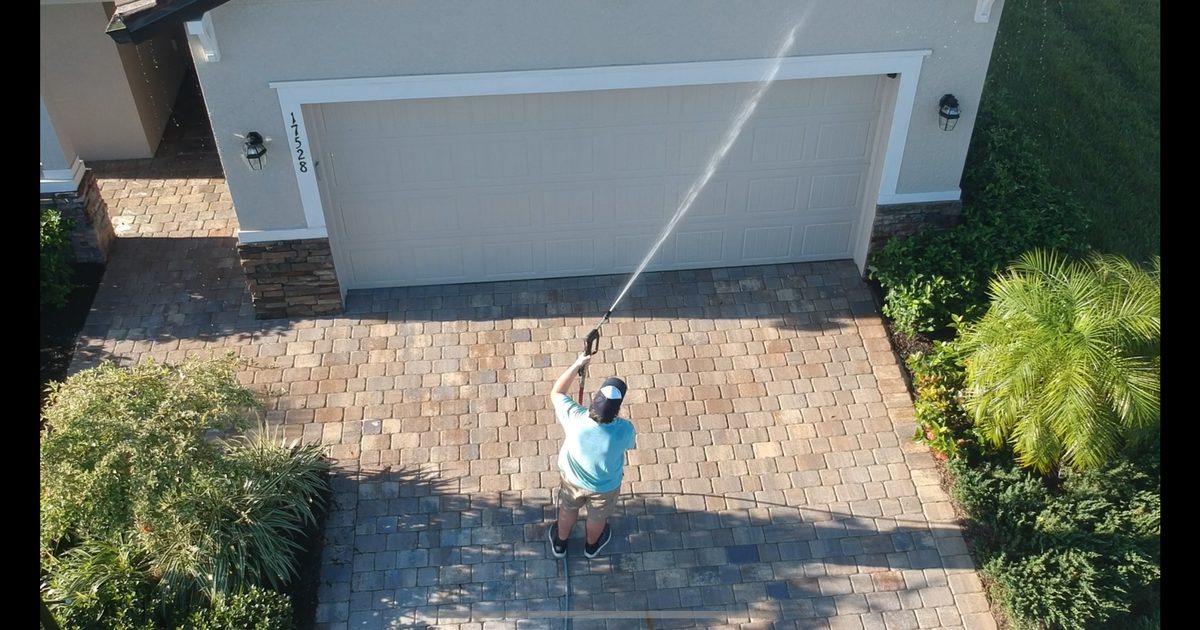
Will pressure washing damage siding — and why does it happen?
The phrase "pressure washing" makes people picture a powerful wand blasting a whole house clean. On hard concrete, high pressure is exactly right. On siding, it's the wrong tool — and that mismatch is where the damage comes from. A washer pushing 3,000+ PSI is built to strip stains off a driveway. Aim that same force at the side of a house and a few things go wrong at once:
- Water gets forced behind the siding. Siding panels overlap and are designed to shed rain that runs down the wall — not a jet of water driven upward and sideways under it. High pressure pushes water into the gaps and up behind the panels, into the wall cavity.
- That trapped moisture feeds mold — and can reach wiring. Once water is inside the wall, it can't dry out quickly. In humid Florida that means mold growing where you can't see it, and in a worst case, moisture reaching insulation and electrical wiring.
- Finishes and panels get damaged directly. High pressure peels paint, cracks or chips brittle panels, and can leave a permanently dulled, fuzzy texture on the surface it hits.
None of this is a reason to fear cleaning your home. It's a reason to make sure your siding never sees high pressure to begin with.
Which sidings are most at risk?
Every common siding in Bradenton and Lakewood Ranch can be damaged by high pressure — some more dramatically than others:
- Vinyl siding. The most common and the easiest to damage. High pressure cracks panels, pops them loose from their channels, and drives water behind them fast.
- Fiber-cement (Hardie-style) siding. Tough-looking, but the painted finish and caulked seams aren't built for a direct blast. High pressure can chip edges and break the seal that keeps water out.
- Stucco. Common on Florida homes and surprisingly delicate. Pressure can gouge the surface, open hairline cracks and force water deep into the wall.
- Painted wood, trim and soffits. Paint is no match for a high-pressure tip — it peels, and the exposed wood underneath soaks up water.
Notice the pattern: it's not about which siding you have. Any siding is the wrong place for high pressure — the material just changes how the damage shows up.
Why soft washing is the safe method for siding
This is the part that surprises homeowners: a proper exterior cleaning gets your walls cleaner than high pressure ever could — without any of the risk. The method is called soft washing, and it works the opposite way. Instead of relying on force, it uses low pressure plus a professional cleaning solution. The solution does the actual work, killing the mold, mildew and algae at the root, and a gentle rinse carries it away. There's no blasting jet to force water behind your siding, crack a panel or strip paint.
Because the solution kills growth rather than just knocking it loose, a soft wash also stays clean longer — which matters in Florida, where humidity grows algae fast on shaded walls. For the full breakdown of when each method belongs, see my companion guide on soft washing vs pressure washing. The plain rule: high pressure for hard concrete, soft wash for everything delicate — and siding is firmly in the delicate column.
How Polar Bear protects your home
I'm Logan, and I personally do every job — so the method is chosen by the same person holding the wand. For siding, that means a low-pressure soft wash, every time. A few things I do to keep your home safe:
- Match pressure to the surface. Concrete and driveways get the high-pressure surface cleaner; siding, screens, soffits and painted surfaces get the gentle soft-wash approach. I bring a professional, industry-grade trailer rig so I can switch between the two on the same visit.
- Protect your landscaping. Plants are pre-wet before the wash and rinsed afterward, and the cleaning solutions are diluted to safe levels.
- Leave it smelling fresher, thanks to the scented soap in every house wash. Our signature is a house wash that leaves your home smelling clean instead of like a chemical cloud — ask about the scent upgrade.
You can see the full scope of what a proper exterior clean includes on our house washing (soft wash) page. And because dirty, algae-streaked siding is one of the most common reasons homeowners get an HOA violation letter in Bradenton and Lakewood Ranch, a soft wash is also the fix that keeps you compliant — without risking the very siding the letter is about.
The bottom line
Will pressure washing damage your house siding? It will if someone uses high pressure on it — but a pro never does. Siding gets a low-pressure soft wash, where the cleaning solution does the work and your walls stay dry, sealed and undamaged. If you're not sure what your home needs, you don't have to guess. Send me a photo of what's dirty and I'll tell you straight which method it needs, with an honest, free estimate — most quotes same day, and most jobs done within 48 hours of booking.