Will Pressure Washing Strip My Paint?
Short, honest answer: yes — pressure washing absolutely can strip paint. High pressure is so good at peeling a finish that painters use it on purpose to prep a house for a fresh coat. So if you're worried whether pressure washing will strip the paint off your siding, deck or fence, that worry is well placed. The fix isn't to skip cleaning — it's to use the right method. Painted surfaces get a gentle soft wash, not a blast.
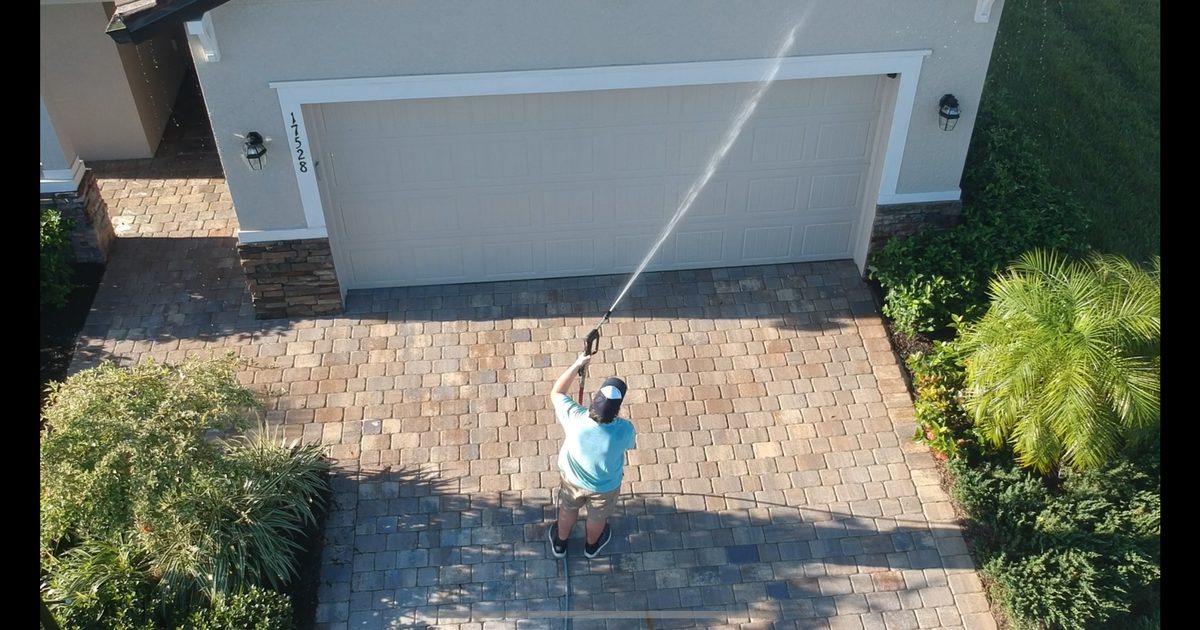
When will pressure washing strip paint?
A pressure washer pushes water at 3,000+ PSI. That's perfect for bare concrete and miserable for a painted surface. Pointed at paint, that force gets under the edge of the coating and lifts it off the wood, stucco or metal beneath. The risk is highest in a few common situations:
- Old or failing paint. Paint that's already cracking, peeling at the edges or letting go in spots will come off in sheets under high pressure. The washer just finishes what time started.
- Chalking (oxidized) paint. As exterior paint ages in the Florida sun, the binder breaks down and the pigment powders to the surface. Chalky paint has lost its grip and lifts easily.
- Wood decks and fences. A stained or painted deck is soft compared to concrete. High pressure not only strips the finish, it furrows the wood grain itself, leaving a fuzzy, splintered surface.
- Close range and lingering. Even sound paint can chip if the tip is held too close or parked in one spot. Distance and angle matter as much as the pressure rating.
This is exactly why "do you pressure wash the whole house?" gets a no from me. Most of a home — the siding, the trim, the soffits, the fence — should never feel a high-pressure tip.
The lead-paint warning for older homes
If your home was built before 1978, the paint may contain lead. Blasting lead paint with a pressure washer turns it into contaminated chips and spray that scatter across your yard, soil and storm drains — a genuine health and environmental hazard, not just a cosmetic one. On a pre-1978 home, paint should never be high-pressure washed. We clean it gently with a low-pressure soft wash, or, if the finish is actively flaking, we tell you straight that it needs a paint pro before any wash.
Why soft washing is safe for painted surfaces
Soft washing solves the whole problem by flipping the approach. Instead of brute force, it uses low pressure plus a professional cleaning solution that kills the mold, mildew and algae at the root. The solution does the cleaning; a gentle rinse carries it away. Nothing pries at the paint, so there's no peeling, chipping or gouged wood. That makes soft washing the correct — and only safe — method for:
- Painted and stained house siding (wood, Hardie, stucco)
- Trim, soffits, fascia and shutters
- Wood decks, railings and fences
- Anything with a finish you want to keep
In our humidity, algae and mold come back fast, so a wash that preserves the finish instead of wearing it down is worth a lot over the years. That gentle method is the backbone of our house washing service, and it's the same reason high pressure stays on the driveway where it belongs — more on that surface-by-surface breakdown in our guide to whether pressure washing can damage house siding.
How to tell if your paint is at risk
You can check your own paint before anyone shows up. Two quick tests tell most of the story:
- The chalk test. Wipe a dark cloth or the palm of your hand firmly across the siding. If it comes away dusty and chalky, the paint is oxidizing and is far more likely to discolor or lift during a wash.
- The edge check. Look closely at corners, seams and trim. Any flaking, bubbling or hairline cracking means the bond is already weak in those spots.
On every house-wash job I start here. Before I wash, I assess the paint and test the solution on a hidden spot — let it dry, check for any color change — so we never gamble with your finish. If the paint is chalking or failing, I lower the solution strength, adjust the method, or tell you honestly that the finish is at risk rather than hand you a surprise. Most washers skip that step. I won't.
The bottom line
Will pressure washing strip your paint? On painted siding, trim, decks and fences — yes, it can, which is precisely why those surfaces should be soft washed, never blasted. High pressure stays on the concrete and driveways that can take it. Match the method to the surface and you get a clean, fresh-smelling home with the paint fully intact. Not sure which camp your surface falls in? Send me a photo and I'll tell you straight — free estimate, most come the same day.